Blacklab
Product · Landing site
Estimates the physical state of a place by combining a physics engine with live sensors.
Visit ↗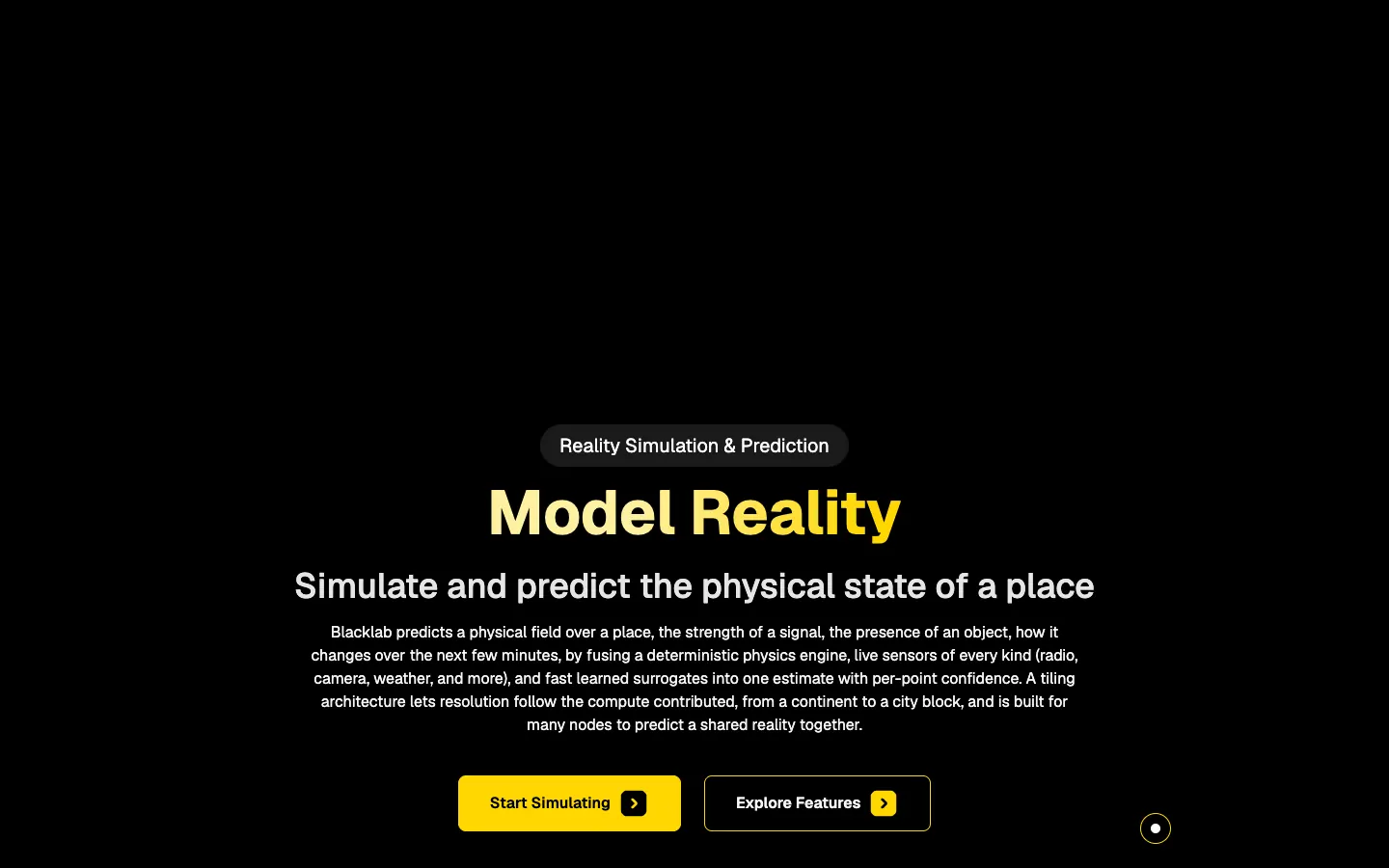
About
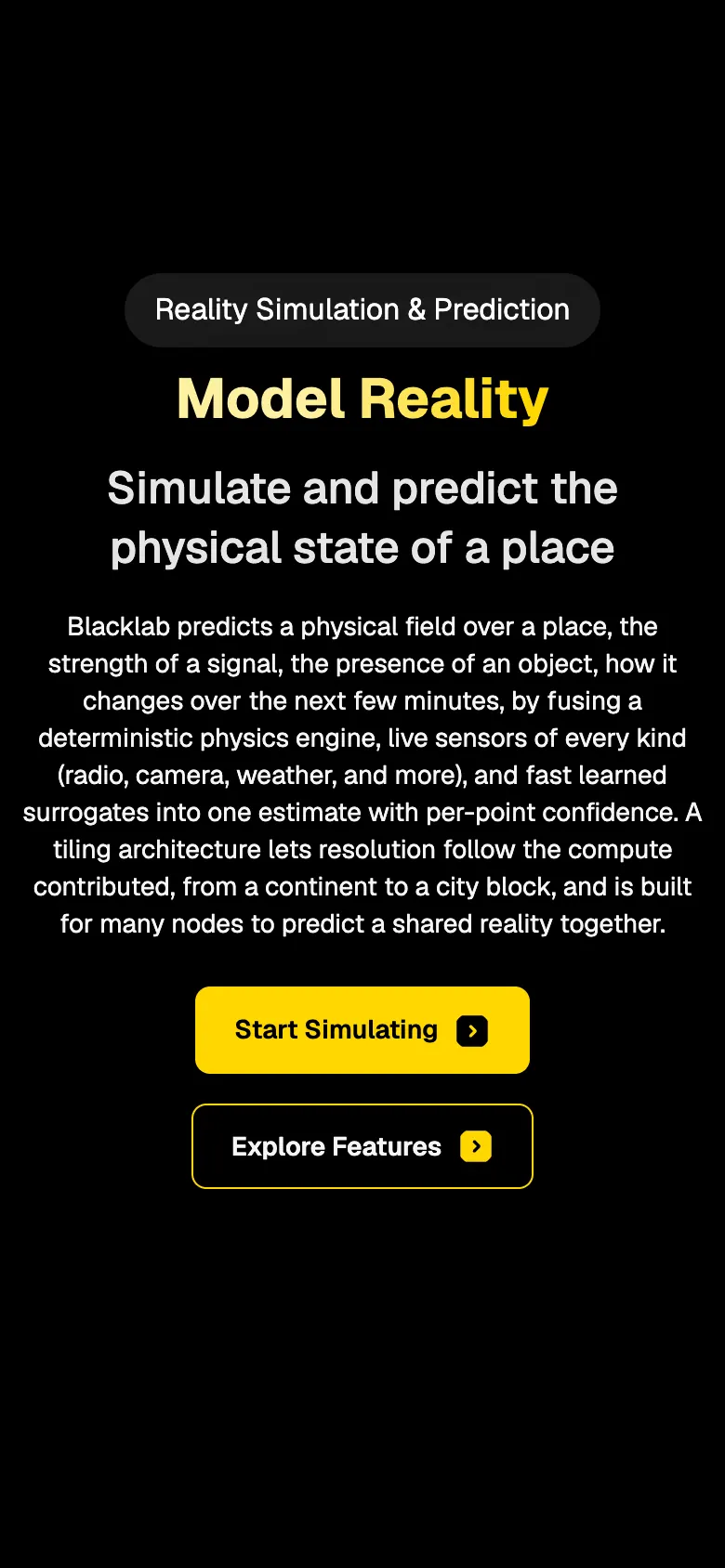
Blacklab predicts a physical field over a place, such as the strength of a signal, the presence of an object or how either changes over the next few minutes. It fuses a deterministic physics engine, live sensors and fast learned surrogates into one estimate with per-point confidence.
Radio, camera, LiDAR, radar, audio and weather feeds pass through a common adapter format called PixelCloud. RF is described as the first validated physics domain.
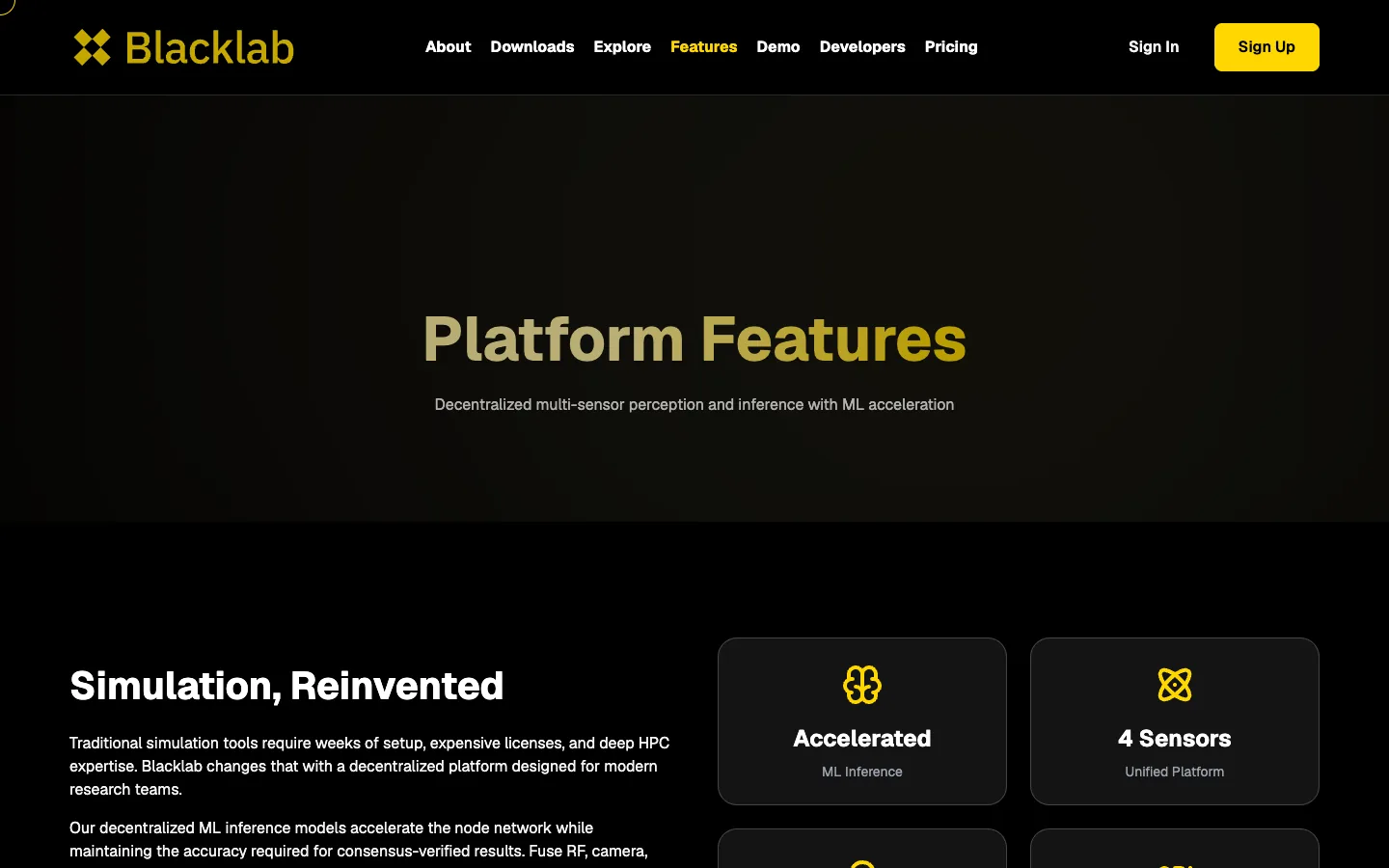
A tiling and attribution design lets many nodes predict a shared area together, with results checked through consensus. People can run the desktop client to contribute compute to the network.
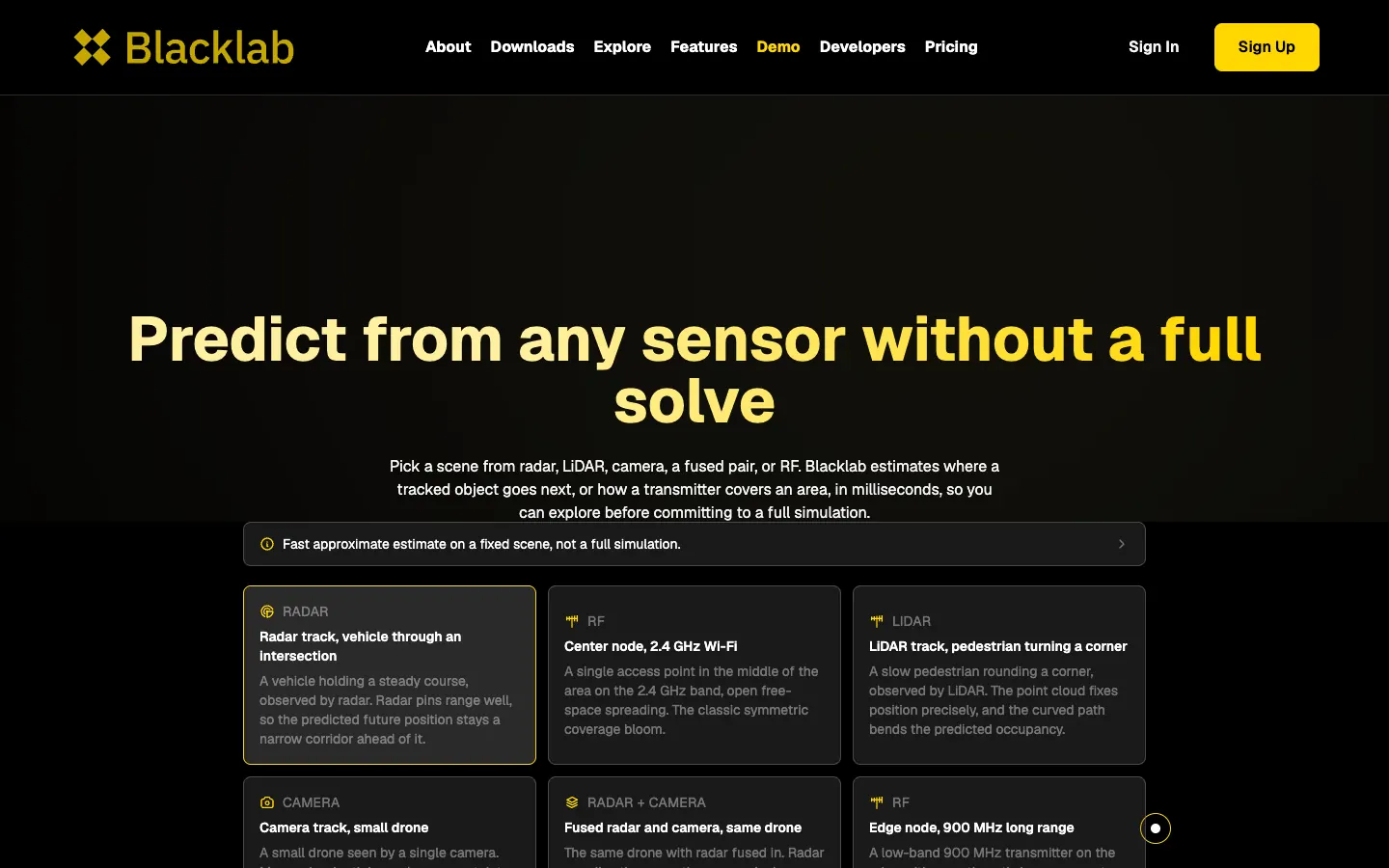
The live demo estimates where a tracked object goes next, or how a transmitter covers an area, and is labeled a fast approximate estimate on a fixed scene.
Butts Studios designed the landing site.
Details
- What we made
- Landing site
- Live
- blacklab.world ↗
- Captured
- October 2026
Gallery
5 images. Tap any one to see it full size.
Articles & notes
Published pages from Blacklab: write-ups, docs and data. Each opens on its own site.
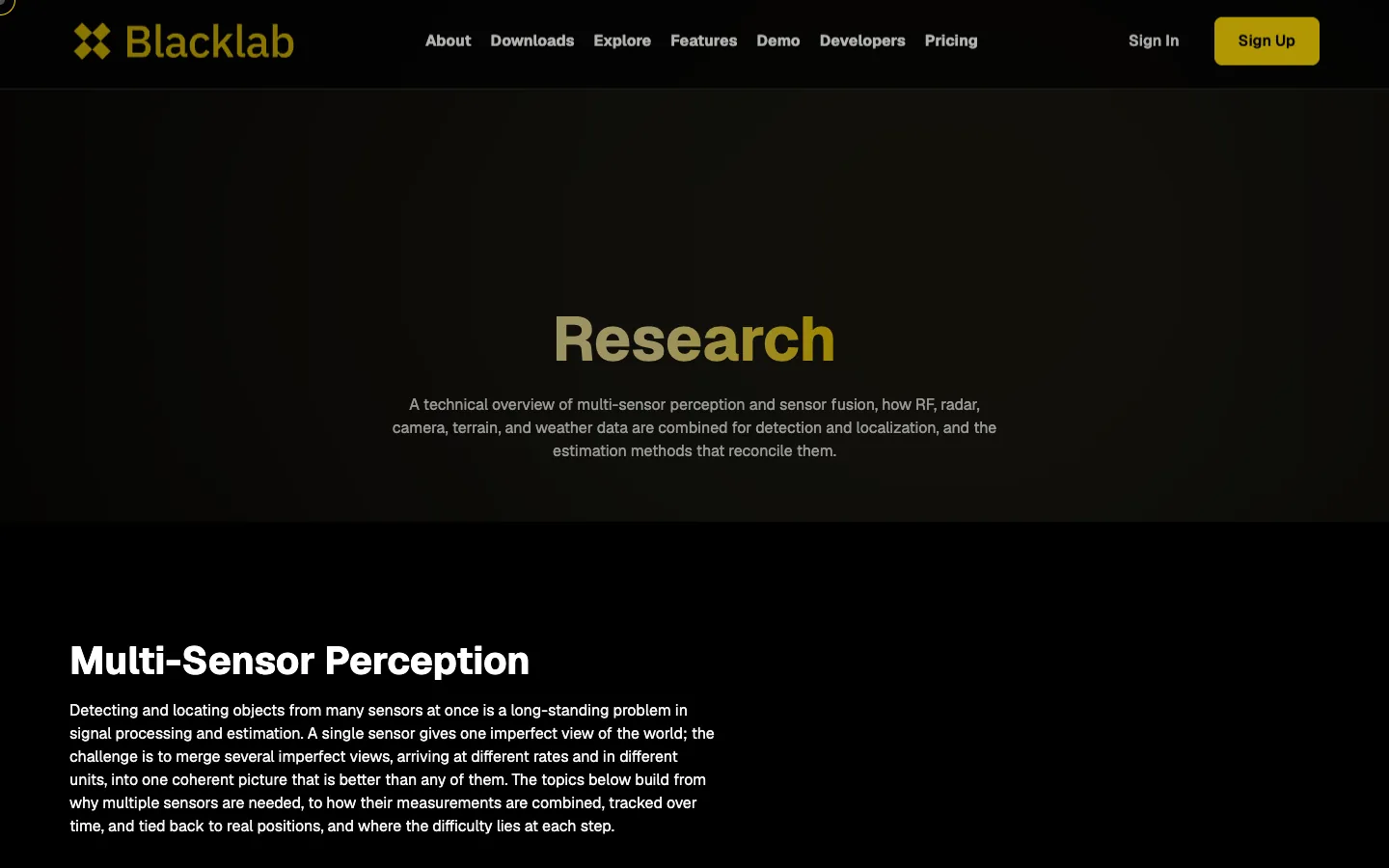
- blacklab.world ↗Multi-Sensor PerceptionTechnical overview of sensor fusion and estimation across RF, radar and camera
- blacklab.world ↗The RF Perception BenchmarkOpen benchmark and reference leaderboard for radio power-field surrogates
- blacklab.world ↗No single sensor is sufficient for real-world perceptionWhy perception systems combine sensors that fail differently
- blacklab.world ↗Radio frequency signals can reconstruct spatial structureHow RF measurements can map the environment around them
- blacklab.world ↗From a snapshot to a living model of the worldMoving from static sensing toward continuously predicted world state
- blacklab.world ↗Benchmarking perception is a question of what the test set leaves outHow held-out test design shapes perception benchmark results